Installation
What Is Above Sheathing Ventilation (ASV)?
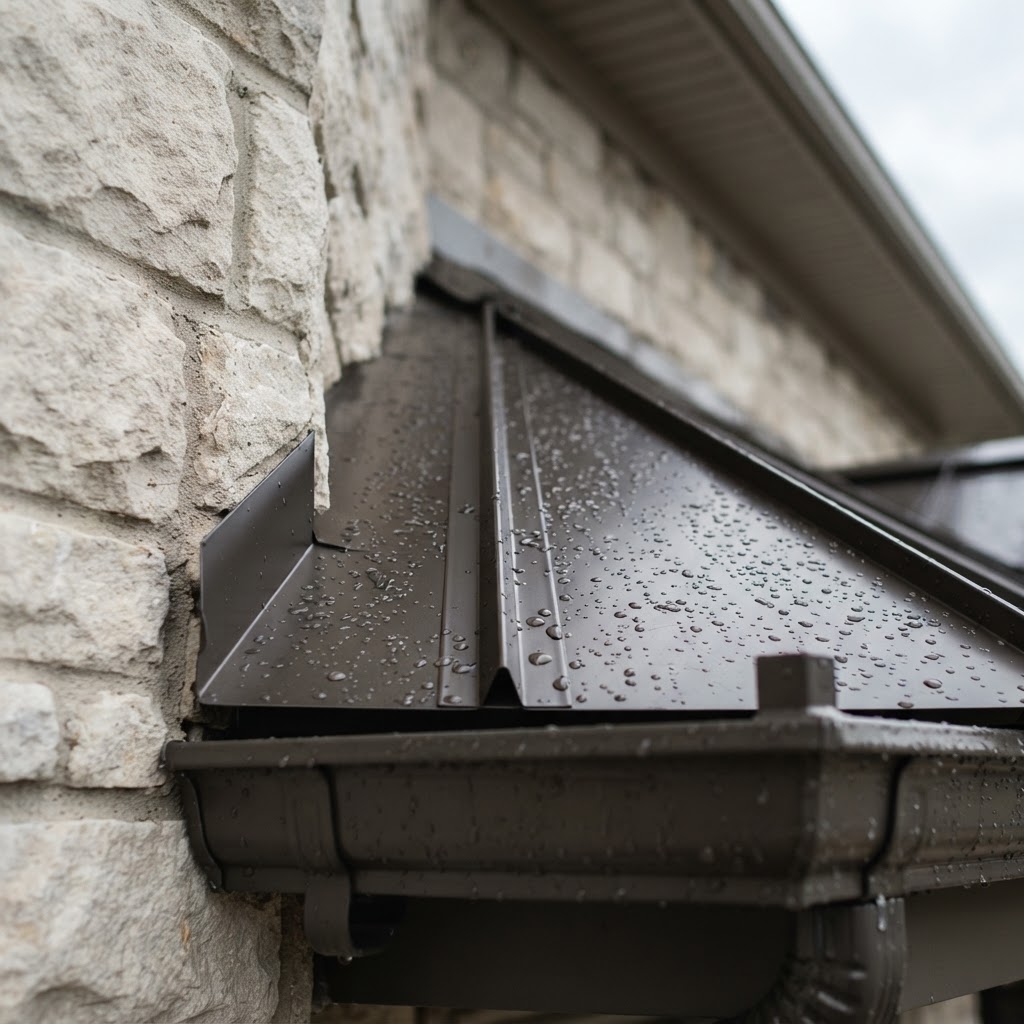
Above sheathing ventilation, usually shortened to ASV, is one of the least visible and most consequential details in a metal roof. It is also the detail most often left out of a quote, because a roof without it still looks finished.
Here is what it is, why it matters in Ottawa, and how to tell whether a quote includes it.
The basic idea
A standard roof assembly is: roof deck, underlayment, metal panel. Heat from the house and moisture from inside both push upward, and in that assembly the underside of the metal sits close to the deck with little room to dry.
An ASV assembly adds a layer of vertical strapping, or counter-battens, over the underlayment before the panels go on. That creates a continuous air channel running from the eave to the ridge, under the metal and above the deck. Air enters at the eave, moves up the channel and exits at the ridge.
In a double-strapped system there are two layers of strapping: one running up the slope and one running across it. The result is a continuous ventilated cavity with a proper drainage plane beneath it.
Why it matters in a cold climate
Ottawa's winters are the reason ASV earns its keep here.
It keeps the deck colder. A ventilated channel lets heat escape before it warms the roof surface, which is exactly what you want to avoid ice dams. A cold roof means snow melts slowly and refreezes less at the eaves.
It lets the assembly dry. Some moisture always gets in, through small leaks, condensation or wind-driven rain. An air channel gives it a path out instead of trapping it against the deck where it feeds rot and mold.
It protects the finish. Metal panels expand and contract with temperature. A ventilated assembly runs cooler in summer, which reduces movement and slows the coating's aging on sun-facing slopes.
It improves comfort. A cooler roof deck means less heat pushed into the attic in July.
How it changes the roof
Adding ventilation raises the roof surface by the thickness of the strapping, typically an inch or more. That affects the details at the edges: eave trim, fascia, drip edge and the transition at walls and chimneys all have to be planned for the extra height.
Good installers plan for it from the start. Bad ones discover it halfway through and improvise with trim, which is where leaks begin.
What to look for in a quote
An ASV assembly should appear as explicit line items, not as a vague "ventilation" allowance. Look for:
- Strapping or counter-battens, with dimensions and spacing
- The air channel detail at the eave and at the ridge
- Ridge venting that actually connects to the channel
- The underlayment used beneath the strapping
- How the added height is handled at fascia, walls and penetrations
If the quote says only "metal roof, supply and install", ask directly whether the assembly is direct-to-deck or ventilated. A direct-to-deck installation is not wrong everywhere, but it is a different product, and it should not be priced the same.
The trade-offs
ASV costs more than a direct-to-deck install: extra material, extra labour, more trim detail. It also adds a small amount of height at the roof edge, which can matter on tight lots or where the roof meets a low wall.
The trade is straightforward. You are paying once for an assembly that keeps the deck dry, the roof cooler and the ice dams smaller for the life of the covering. Since the metal will outlast the underlayment by a wide margin, the underlayment and the ventilation beneath it are the parts that decide whether the roof actually reaches its expected life.
Direct-to-deck is not always wrong
On a simple shed or a porch with open framing, a direct-to-deck install can be perfectly reasonable. On a heated house with an attic, in a climate with this much snow, the ventilated assembly is the better engineering.
The distinction to remember: the metal is the visible layer, but the roof is the whole assembly. The part you never see is the part that fails first.
Ask before you sign
When you talk to contractors, ask two questions: is this a ventilated assembly, and can you show me the eave and ridge detail. If the answers are clear, you are talking to someone who builds roofs rather than installs panels.
You can also ask the Roof Advisor to explain how ASV fits your specific roof and attic, and use the visualizer to choose the profile and colour that will sit on top of it.
Put this on your own house
Upload a photo and preview the Ottawa brands, colours and profiles from this guide directly on your home.
Keep reading
Standing Seam vs Corrugated vs Tile: Which Profile Suits Your House
The profile decides how the roof sheds snow, how it looks and what it costs. A clear comparison of the three families.
Do You Need Snow Guards on a Metal Roof in Ottawa?
Snow leaves a metal roof in sheets. Guards break that up over the places people walk, park and stand. Where they belong and what to ask.