Installation
Standing Seam vs Corrugated vs Tile: Which Profile Suits Your House
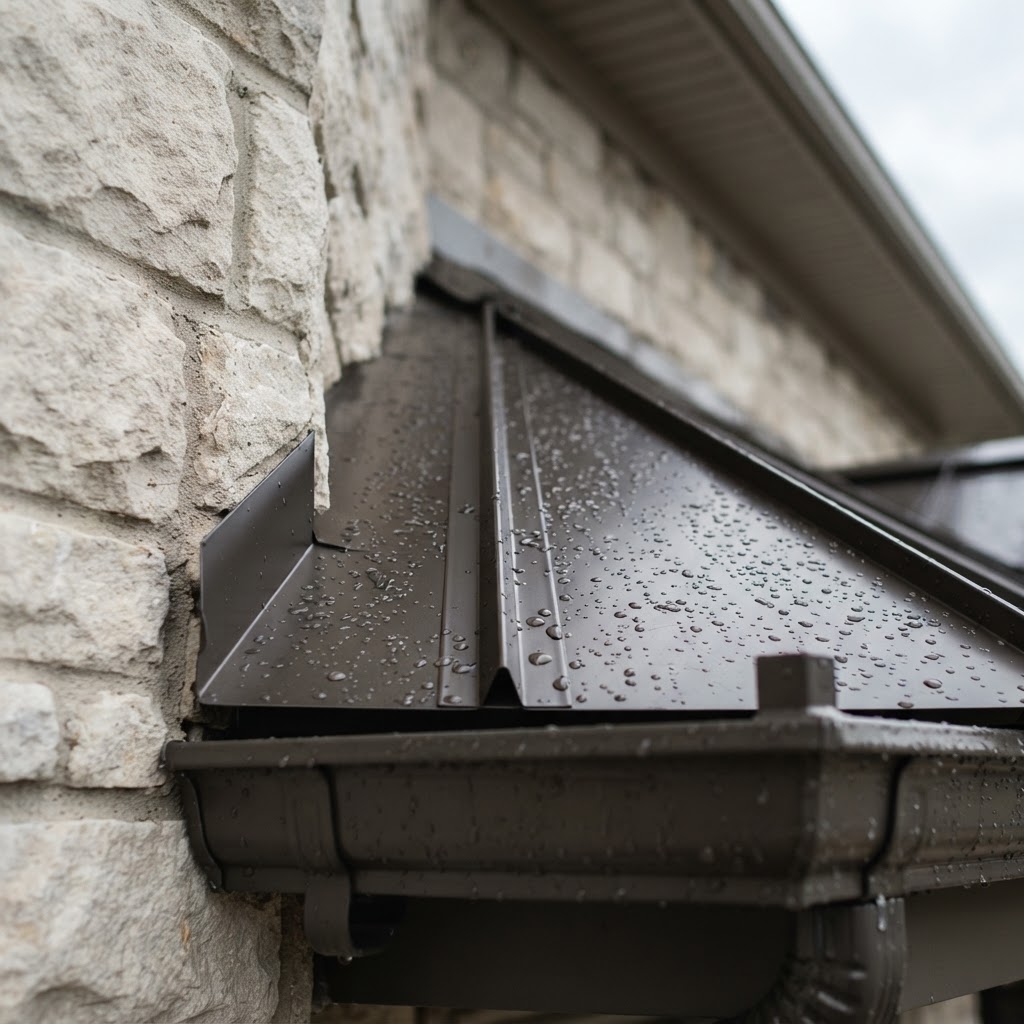
Almost every metal roof question comes down to profile. The profile decides how the roof handles water and snow, how it looks from the street, how it is installed and, to a large degree, what it costs.
There are three families worth understanding: standing seam, through-fastened panels (corrugated and ribbed), and metal tile or shake. Each suits a different kind of Ottawa house.
Standing seam
Standing seam is the premium option and the one most people picture when they hear "metal roof". Panels run vertically from eave to ridge with a raised seam folded or snapped together, and the fasteners are hidden under the seam. Nothing penetrates the panel face.
Why it works here: concealed fasteners mean no exposed screws working loose through freeze-thaw, and the smooth surface sheds snow cleanly. Long panels with few horizontal joints handle expansion and contraction better than short pieces.
Where it is limited: it needs a reasonable slope to perform, it is harder to walk on, and it is the most expensive of the three. On a very complex roof with many small planes and valleys, the cutting and waste add up quickly.
Best fit: simple gable and hip roofs on two-storey homes, modern and farmhouse styles, anyone planning to stay in the house for the long term.
Through-fastened panels: corrugated and ribbed
These are the workhorse profiles. Panels are screwed through the face into the deck, with a washer-sealed fastener at each low point. Corrugated is the classic wave; ribbed panels have deeper, flatter ribs and a more architectural look.
Why it works here: it is the most economical metal option, quick to install, and well suited to porches, outbuildings, garages and simple main roofs. It also handles lower slopes better than standing seam in many cases.
Where it is limited: the fasteners are exposed. Washers can dry out and need periodic checking, and on a very long panel the movement of the steel against a fixed screw can enlarge the hole over decades. Good installers account for this with the right fastener and slotting.
Best fit: budget-conscious projects, cottages and outbuildings, homes where the roof is simple and the visible slope is modest.
Metal tile and shake
Stone-coated steel tile imitates the geometry of clay tile or the texture of cedar shake, but in steel. The panels are stamped into a repeating profile, then coated with granules.
Why it works here: it gives a traditional look that suits older Ottawa neighbourhoods and Mediterranean or craftsman styles, with the durability of steel. It is heavier than a smooth panel and hides dust well.
Where it is limited: the texture holds more snow than a smooth panel, and the many small profiles give ice and debris more places to sit. It is also the highest cost per square of the three.
Best fit: homes where the style calls for tile or shake, and roofs with enough slope to shed properly.
How to choose between them
Ask yourself four questions:
- What does the house want? A 1920s brick two-storey usually looks wrong in a stark modern seam. A new build with clean lines usually looks wrong in imitation shake.
- How simple is the roof? Complex geometry punishes premium panels with waste and labour. Simple geometry rewards them.
- How long are you staying? Over decades, the cost gap between profiles narrows considerably.
- What can you see from the street? Spending on the visible front slope and using a simpler profile on a hidden rear plane is a legitimate way to control budget.
What the app supports
The RoofViz catalogue includes standing seam, ribbed panel, several tile and shake profiles, and brand-specific lines from the Ottawa manufacturers we cover. You can preview any of them on your own house in the visualizer, and the colour catalogue shows which profiles each brand offers in which colours.
If you are torn between two families, the Roof Advisor can weigh your roof pitch, exposure and house style and point you at the profile that fits. Seeing a standing seam and a tile profile on the same photograph usually settles it faster than any amount of reading.
Put this on your own house
Upload a photo and preview the Ottawa brands, colours and profiles from this guide directly on your home.
Keep reading
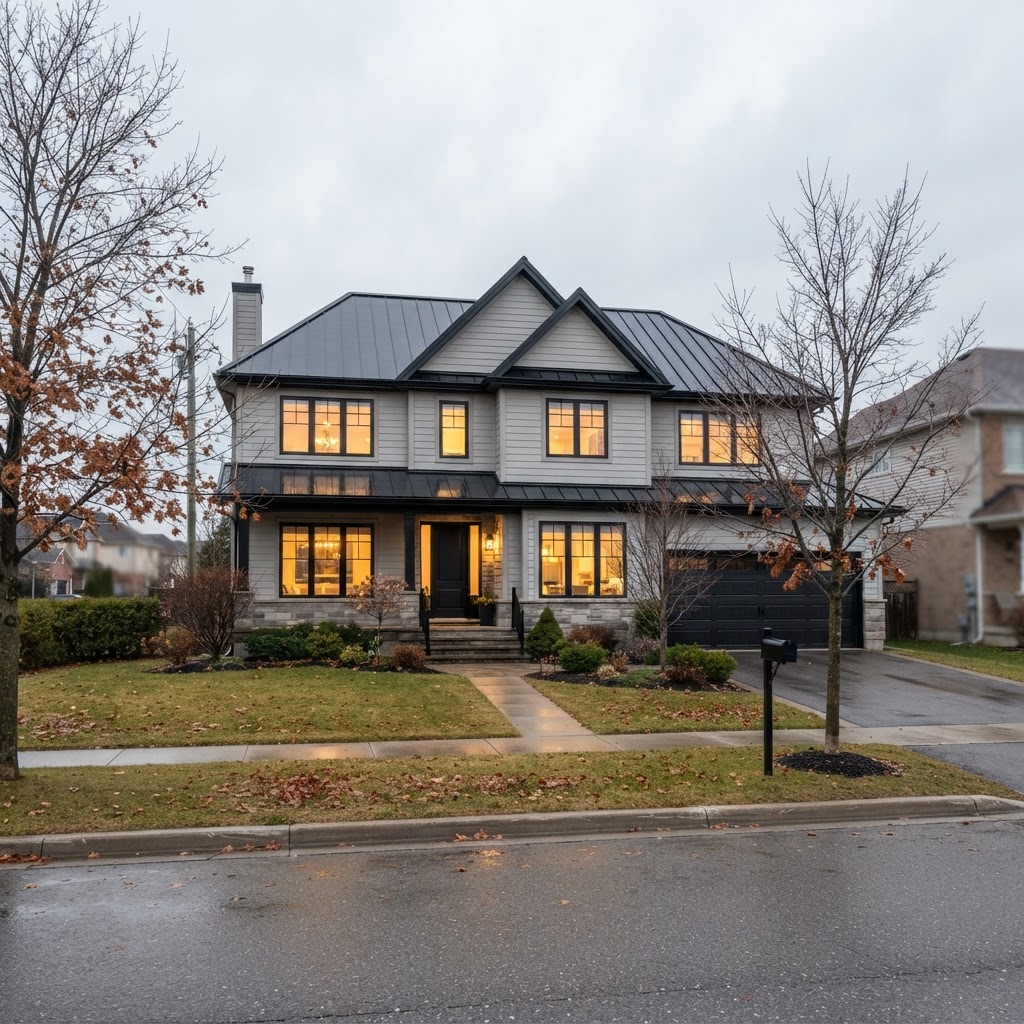
Do You Need Snow Guards on a Metal Roof in Ottawa?
Snow leaves a metal roof in sheets. Guards break that up over the places people walk, park and stand. Where they belong and what to ask.
What Is Above Sheathing Ventilation (ASV)?
The invisible layer under a metal roof that keeps the deck dry, the roof cooler and ice dams smaller. What it is and how to spot it in a quote.