Installation
Do You Need Snow Guards on a Metal Roof in Ottawa?
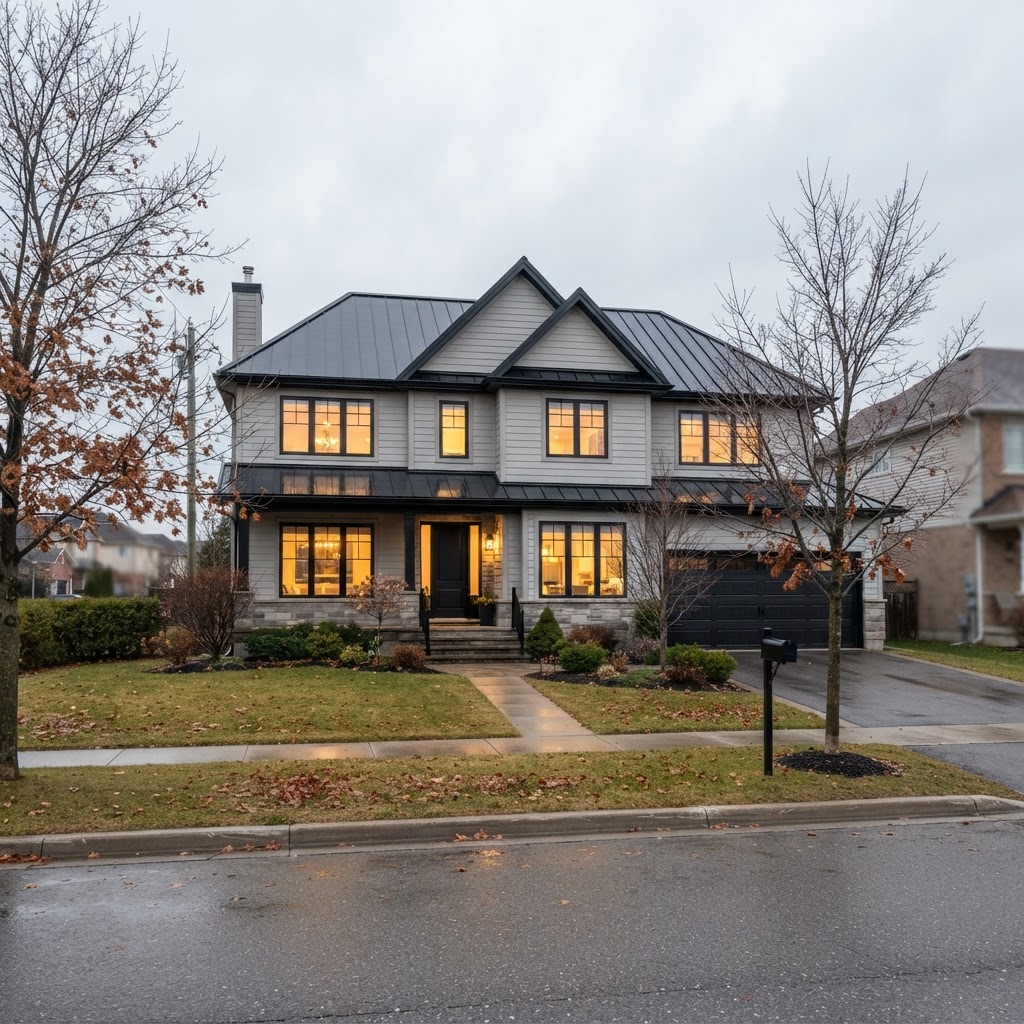
One of the best things about a metal roof is also the thing that worries people most: snow does not stay on it. Once the surface warms or the load builds, the snow releases in a sheet and lands wherever gravity points.
Most of the time that is fine. When it lands on a walkway you use every morning, a driveway where the car is parked, or a lower roof over an entrance, it is a problem worth designing around.
What snow guards actually do
Snow guards do not hold the snow on the roof permanently. They break the sheet into smaller pieces and slow its release, so snow trickles off in fragments instead of sliding as a single heavy slab.
That reduces two risks: a sudden dump onto a path or doorway, and the impact load on whatever sits below, including a lower roof, a porch, a car or a gas meter.
Where Ottawa homeowners usually need them
Think about what sits under the roof edge:
- Above the front door or any regularly used entrance
- Above a walkway, driveway or parking spot
- Above a lower roof, porch or garage roof
- Above a deck, patio or hot tub
- Above a gas meter, air conditioner or utility equipment
- On steep slopes, where release is faster and more forceful
- At valleys, where snow from two planes converges
If none of these apply, and the snow has a clear path to open ground, guards may be optional. They are still common on the street-facing slope of Ottawa homes simply because that is where people walk.
The main types
Pad-style guards are small individual brackets placed in a grid across the lower portion of the roof. They are the most common choice on standing seam because they can be clamped to the seam without piercing the panel. They are unobtrusive and work well on moderate snow loads.
Bar-style guards run in a rail across the roof, supported by brackets. They stop more snow and suit heavier loads and steeper pitches, at the cost of more visible hardware.
Wire and rail systems combine a bracket and a horizontal wire. They are effective and relatively low profile, and they suit stone-coated tile profiles where clamping is not an option.
On through-fastened panels, guards are usually fastened through the panel with sealed screws, which is straightforward but means more penetrations.
Placement matters more than quantity
A single row at the eave is not a solution. Guards are placed in a calculated pattern, usually over the lower portion of the slope, with spacing based on pitch, snow load and the length of the run above. Too few in the wrong place and the snow simply releases between them; too many and you create a new load point.
Ask your installer how the layout was determined. A good answer references pitch, snow load and the panel type, not a fixed count per square.
Snow guards are not an ice dam fix
These are two different problems. Ice dams come from heat escaping the house, melting snow at the upper roof and refreezing at the cold eave. Guards do nothing about that. Fixing ice dams means insulation, air sealing, ventilation and proper ice and water protection at the eaves. See above sheathing ventilation for the part the roof assembly plays.
What drives the cost
Guards are a modest addition relative to the roof itself, and the variables are simple: the length of roof edge protected, the type of guard, the number of rows required, and whether the roof is being installed at the same time. Adding guards to an existing roof later costs more because it means working on a finished roof.
If guards are part of your plan, put them in the original quote. Retrofitting them after the panels are down is the expensive path.
What to ask your contractor
- Which slopes will get guards, and why those
- The guard type and how it attaches without compromising the panel
- The spacing and number of rows, and what that is based on
- Whether the guard manufacturer's warranty is affected by the roof warranty
- How guards interact with the eavestrough and the drip edge
See the roof, then plan the details
Guards are small hardware, but they change the look of a roof edge slightly. Previewing your chosen profile on the house first, in the visualizer, makes it easier to picture where the guards will sit. If you are unsure whether your layout needs them, describe your entrance, driveway and lower roofs to the Roof Advisor and it will flag the spots that usually warrant protection.
Put this on your own house
Upload a photo and preview the Ottawa brands, colours and profiles from this guide directly on your home.
Keep reading
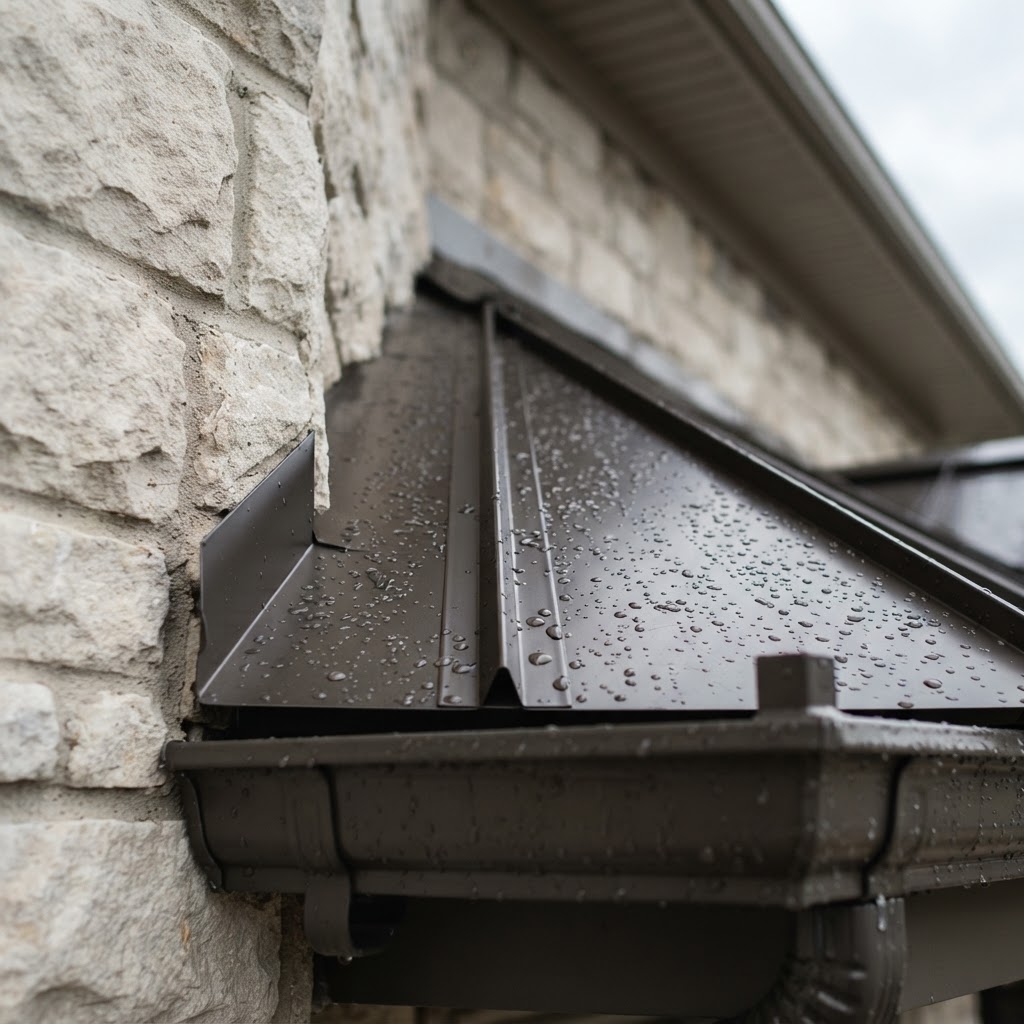
Standing Seam vs Corrugated vs Tile: Which Profile Suits Your House
The profile decides how the roof sheds snow, how it looks and what it costs. A clear comparison of the three families.
What Is Above Sheathing Ventilation (ASV)?
The invisible layer under a metal roof that keeps the deck dry, the roof cooler and ice dams smaller. What it is and how to spot it in a quote.